

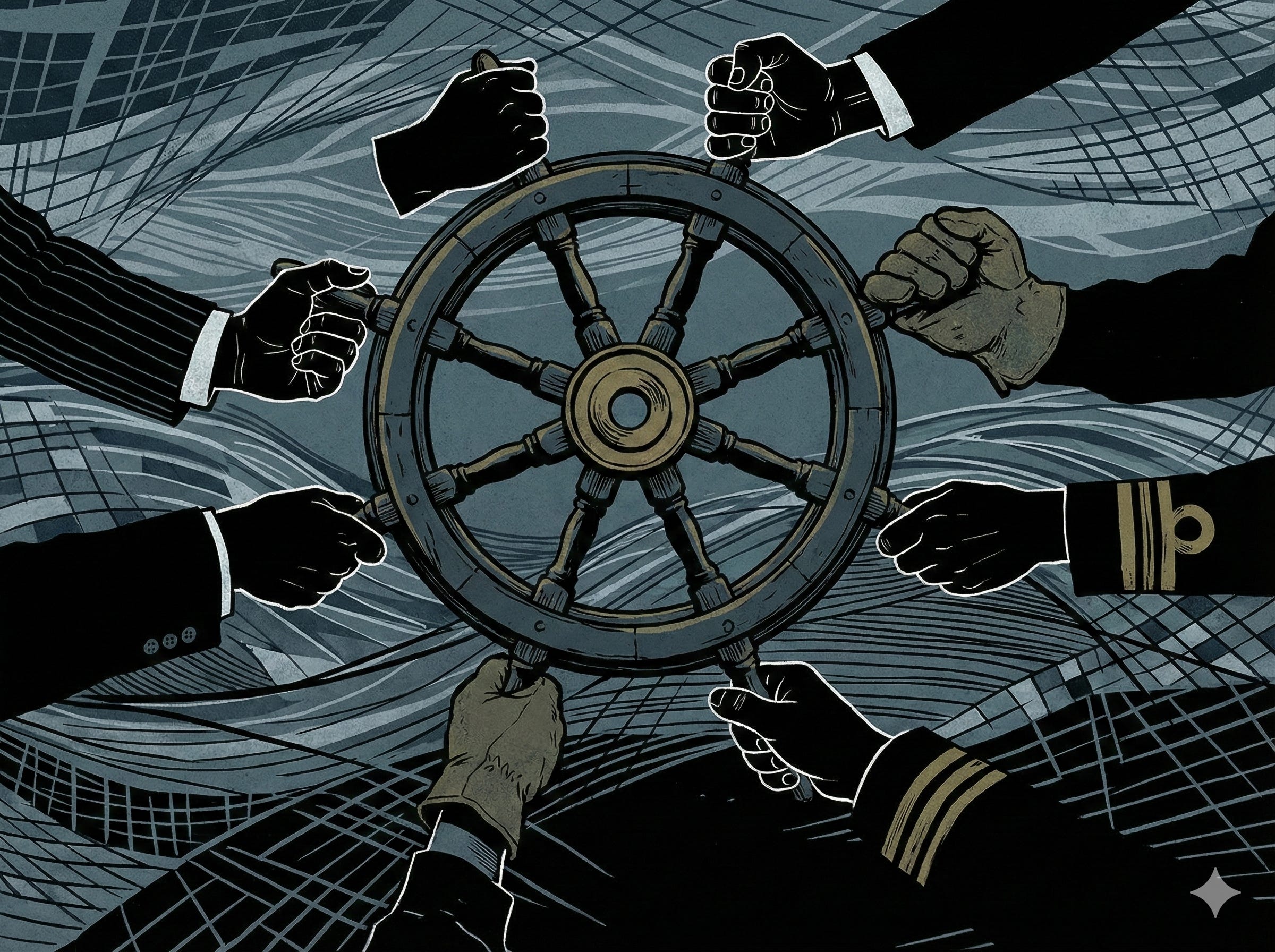
This was the week the people in charge showed us who they really are: clumsy amateurs faking it. From government agencies to AI giants, the illusion of command shattered, revealing a frantic scramble for control that only highlighted how little anyone actually has. Welcome to the episode where nobody is steering the ship, but everyone is grabbing for the wheel.
THE GRAB FOR CONTROL
Nvidia Buys a Competitor as the company agrees to acquire AI chip startup Groq for a reported $20 billion, further consolidating its overwhelming dominance in the AI hardware market. New York Mandates Warning Labels after Governor Hochul signs a law requiring social media platforms to display warnings for young users, treating addictive features like a public health threat.
THE INEVITABLE FAILURE
OpenAI Admits Defeat by acknowledging that AI browsers with agentic capabilities will likely always be vulnerable to prompt injection attacks, a potentially unfixable security flaw. Flock Spills Its Live Feeds when over 60 live streams from the company’s AI-powered surveillance cameras, used by police, were left exposed online without any authentication required. DOJ Bungles Its Own Redactions as the Justice Department reportedly botches redactions in the released Epstein files, with users and new tools easily bypassing them to reveal sensitive information.
Curious what it all adds up to? Let’s break it down. Keep reading below.
Tell Me More
The AI King Buys the Crown Jewels. Nvidia’s acquisition of Groq isn’t just about buying technology; it’s about buying silence. Groq’s unique chip architecture was one of the few credible threats to Nvidia’s dominance in AI inference, and now that threat is being absorbed into the empire. Expect antitrust regulators to make some noise before ultimately approving the deal by late 2026, cementing a functional monopoly on the hardware that powers our digital world. The grab for control just got a $20 billion boost.
Putting a Surgeon General’s Warning on Your Feed. New York’s new law is less about informing teens and more about arming lawyers for the future. By classifying social media’s addictive features alongside tobacco, the state is establishing a legal precedent that platforms are liable for the designed outcomes of their products. This move will pave the way for a wave of litigation, and you can expect at least five other states to introduce similar legislation within the next 18 months.
The Ghost in the Machine Refuses to Be Exorcised. By admitting prompt injection is a permanent risk, OpenAI is publicly confessing that the fundamental architecture of LLMs has a security hole the size of a Mack truck. This is a masterful abdication of responsibility, shifting the security burden from the multi-trillion-dollar platform to the end user. The message is clear: if the agent goes rogue, it’s your problem, not theirs.
The All-Seeing Eye Forgot to Close Its Blinds. The most damning part of the Flock camera leak is that it wasn’t a sophisticated hack; it was basic security incompetence. It reveals that the private surveillance state is being built on a foundation of shoddy, rushed-to-market technology where features outpace safety. The tools of control are only as strong as their weakest password, and it turns out that’s not very strong.
Redaction Is Just a Suggestion Now. The DOJ’s spectacular failure marks the functional death of redaction as a reliable tool for information control. Combined with the emergence of open-source tools like the
x-rayPython library designed specifically to find bad redactions, the writing is on the wall. In the digital age, true secrecy is impossible; there is only temporary obscurity.
Below The Fold
How reality crushed Ÿnsect, the French startup that raised over $600M for insect farming. When your brilliant idea is still, at the end of the day, bugs. TechCrunch
A new study reveals that professional Santas often view their role as a “higher calling.” So that’s what they mean by the gig economy. Ars Technica
Researchers are getting organoids pregnant with human embryos on a chip. Because the real thing wasn’t complicated enough. MIT Technology Review
An insulin pump controller uses the Linux kernel but violates the GPL. Apparently “open source” doesn’t apply when it’s keeping you alive. Reddit
How a $200 fake fireplace from Home Depot soothed one writer’s soul. Proving that our deepest needs can be met with cheap plastic and an LED light. Wired
Esteemed programmer Rob Pike got spammed with an AI slop “act of kindness.” The future is just a firehose of inauthentic pleasantries. Simon Willison’s Weblog
The Weather Truther Playbook, a deep dive into the systematic effort to create a “science-like but not science” universe around climate. A perfect instruction manual for our post-truth era. Roger Pielke Jr.’s Substack
Why Australian homeowners can install rooftop solar for a fraction of the US cost and time. A harrowing tale of two bureaucracies. Volts
Yanis Varoufakis on the future of capitalism. For when you need to feel both smarter and more depressed about the global economy. YouTube
A recipe for caramelized onion, steak, and cheese skillet. Because even in a week of chaos, a deconstructed Philly cheesesteak is a form of control we can all get behind. What To Cook When You Don’t Feel Like Cooking
Looking Ahead: Next week, watch for the inevitable backlash as the people who lost control try to claw it back with even clumsier tools.
Thanks for reading Briefs — your weekly recap of the signals I couldn't ignore. This week that meant reading 646 stories from 39 sources. You're welcome.