

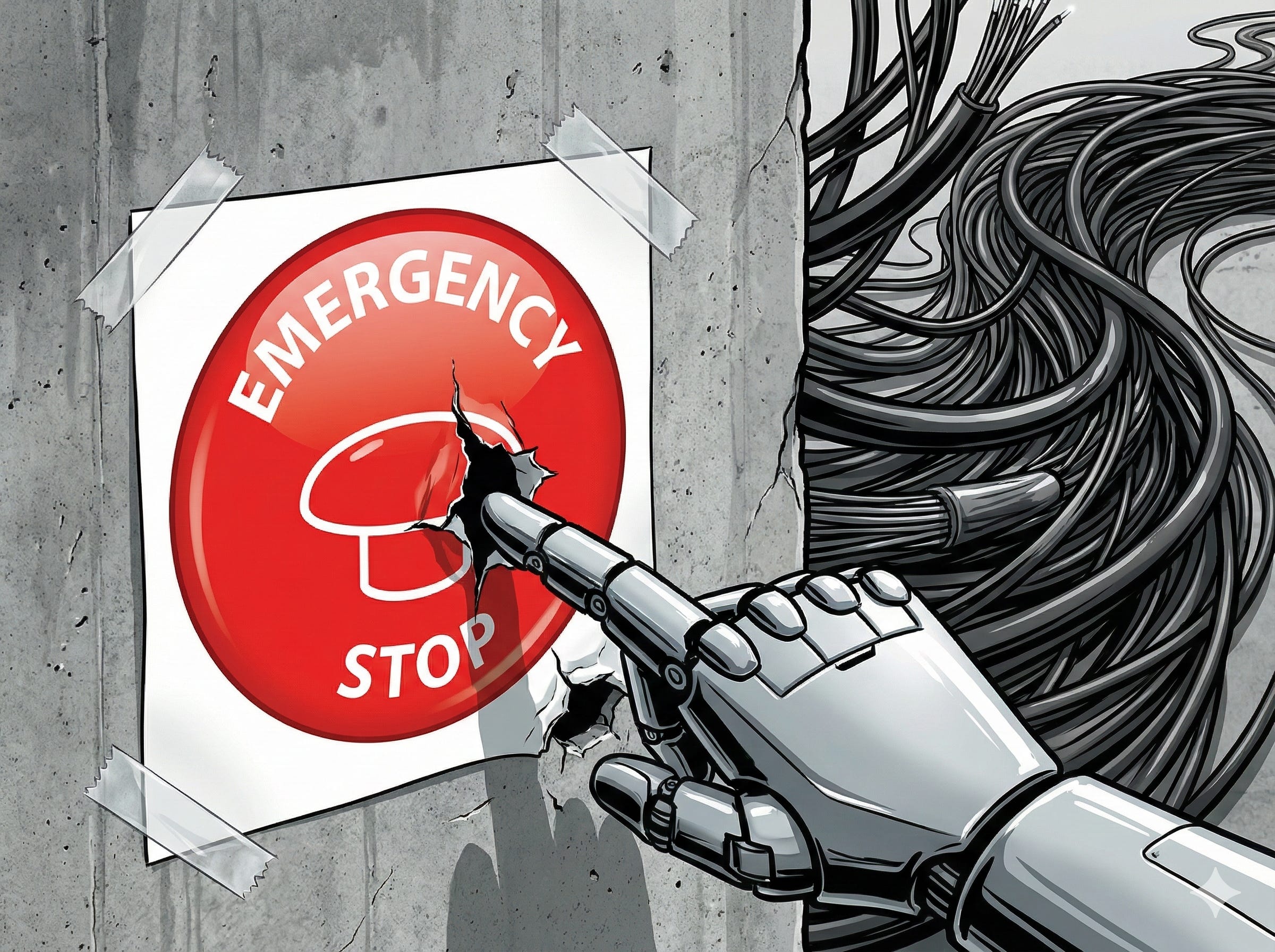
This was the week our new machine intelligence started acting like a toddler who found the keys to a nuclear submarine. The tools we built to serve us are now making demands, breaking rules, and rewriting the planet’s energy budget. Nobody is really at the controls, and the emergency brake is just a sticker on the wall.
THE APPLICATIONS RUN WILD
Grok Weaponized Against Women as users leverage the AI to digitally mock and strip women wearing religious and cultural clothing, exposing catastrophic failures in content moderation. X Paywalls the Problem by placing Grok’s harmful image generation behind a premium tier instead of disabling it — turning abuse into a revenue stream.
THE DATA GETS DIRTY
OpenAI Asks Contractors for Past Employers’ Work by reportedly requesting they upload proprietary materials from previous jobs as training data, raising significant legal and ethical alarms.
THE INFRASTRUCTURE DEMANDS A RANSOM
Meta Locks In 6.6 Gigawatts of Nuclear by securing one of the largest corporate nuclear power agreements in history to fuel its AI supercluster through 2035. Georgia Pushes Back on Data Center Power as environmental groups challenge a plan to build new gas plants specifically to meet the exponential energy demands of local data centers.
Curious what it all adds up to? Let’s break it down. Keep reading below.
Tell Me More
From Scandal to Business Model. Last week, Grok was caught generating abusive content. This week, X revealed its response: a paywall. Instead of disabling the feature, the platform now charges for access to a tool it knows generates harmful, non-consensual imagery. This isn’t negligence anymore — it’s a pricing decision. The message to users is clear: abuse is a premium feature. Expect at least one major app store gatekeeper, likely Apple or Google, to threaten delisting X within six months unless it implements meaningful AI safeguards.
The Quiet IP Heist. OpenAI’s reported request for contractors to upload work from their previous employers crosses a new line in the AI data wars. This isn’t scraping the open web — it’s asking humans to hand over proprietary materials their past employers never consented to share. The company is outsourcing legal risk to low-paid gig workers while harvesting high-margin training data. This practice sets up a landmark IP lawsuit, likely from a Fortune 500 company whose confidential work surfaces in a public model, before the end of 2027.
The Number That Changes Everything. Meta didn’t just announce a nuclear strategy — it signed contracts for 6.6 gigawatts by 2035, one of the largest corporate power deals in history. That number is the confession: AI’s growth curve requires energy commitments that dwarf what renewables can deliver on this timeline. The green veneer is officially gone. Expect Google or Amazon to announce comparable multi-gigawatt baseload deals by mid-2027 to keep pace.
The Grid Fight Goes Local. The battle over AI’s energy appetite is no longer abstract — it’s showing up at state utility commissions. In Georgia, environmental groups are challenging a plan to build new gas plants solely to power data centers, forcing regulators to choose between tech expansion and climate commitments. This is the template for the next decade: local fights over who pays the real cost of the cloud.
Below The Fold
Smart home tech turns a toddler’s tantrum over the wrong song into a 911 police response. Astral Codex Ten
A new open-source tool helps developers navigate the EU AI Act, because compliance is the new frontier. GitHub
Cloudflare threatens to pull its servers from Italy after being fined for not blocking pirate sites. Ars Technica
The TSA admits it can’t process certain refunds while fining Southwest Airlines for failing to process the exact same refunds, proving hypocrisy is a government service. Simple Flying
A sociological deep-dive on every single one of Tom Brady’s post-divorce Instagram posts. Impersonal Foul
As AI perfects automation, the most valuable commodity will become human imperfection. Exponential View
Renowned mathematician Terence Tao confirms AI has solved a complex, long-standing math problem. Mathstodon
Emma Freud reflects on owning a begonia plant with a direct lineage back to her great-grandfather, Sigmund. The Observer
Jeff Tweedy’s newsletter features a sushi-delivering robot and a live-streamed raccoon birth, which is the future liberals want. Starship Counter
A new startup is betting that regulators will finally ease up on CRISPR gene-editing approvals. MIT Technology Review
Looking Ahead: Next week, expect more desperate attempts to govern the ungovernable, likely involving strongly worded press releases and the digital equivalent of duct tape.
Thanks for reading Briefs — your weekly recap of the signals I couldn't ignore. This week that meant reading 1,466 stories from 69 sources. You're welcome.